
29th Street Beach, South Side (1919 Race Riot Origin)
The 1919 Race Riot: How a Drowning Boy Ignited a Week of Violence
by LocaleLore5 months agohistory
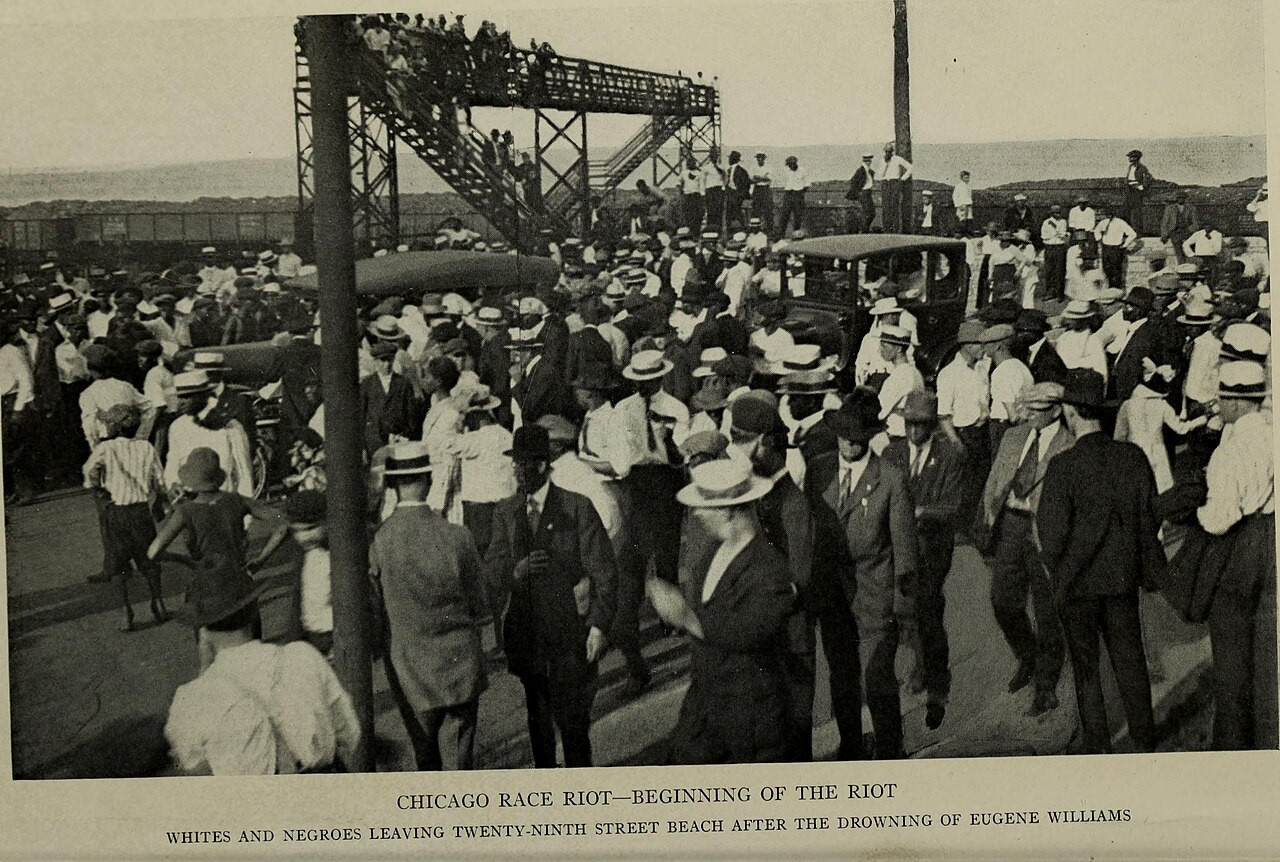
Photo: Chicago Commission on Race Relations · No restrictions
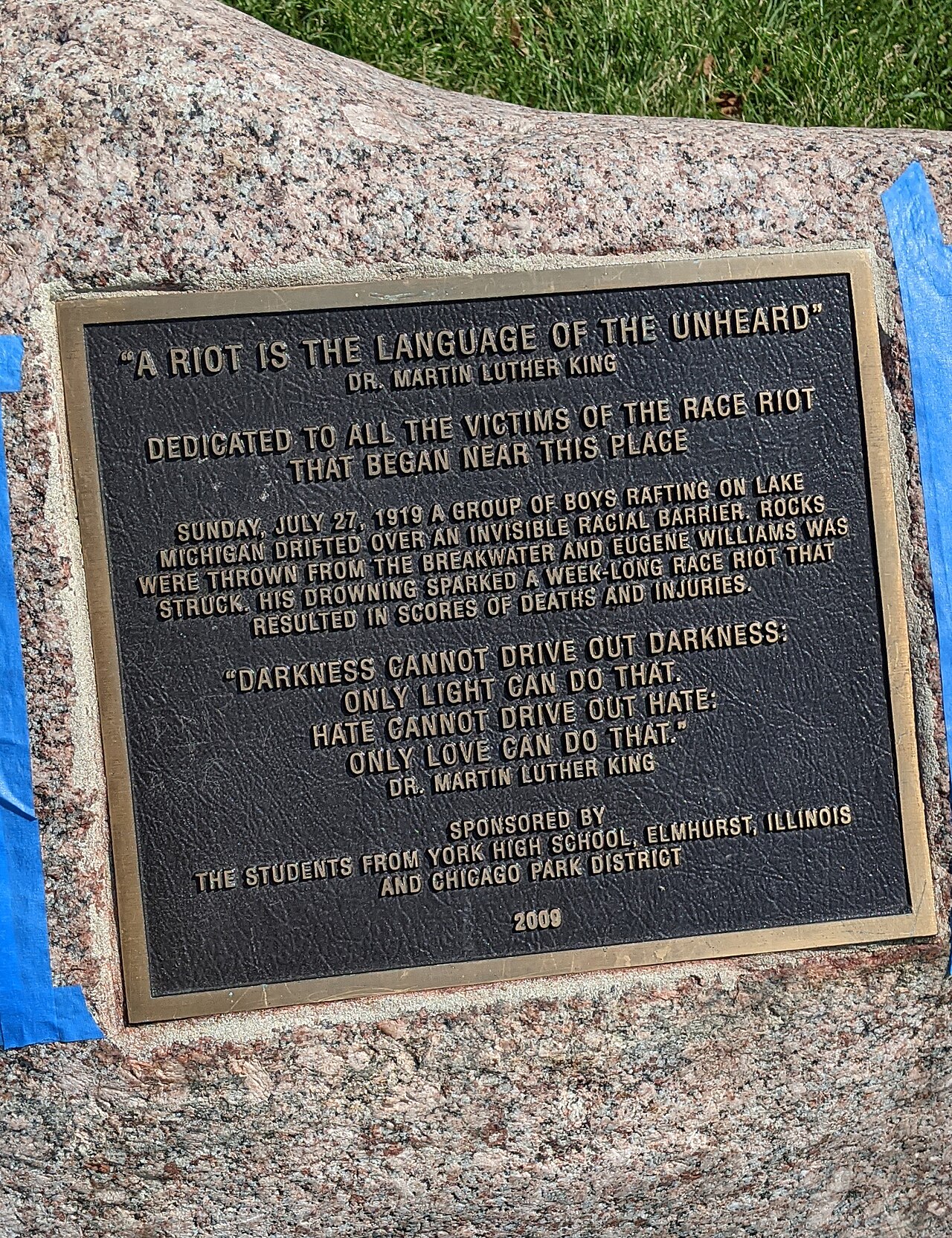
Photo: IntegrityPen · CC BY-SA 4.0
On July 27, 1919, a Black teenager named Eugene Williams floated across an informal racial boundary while swimming in Lake Michigan near the 29th Street beach, was stoned by white bathers, and drowned. When police refused to arrest the white man who had thrown the stones, violence erupted across the South Side. For about a week, Chicago was consumed by one of the worst race riots in American history. Thirty-eight people died — 23 Black and 15 white. More than 500 were injured. Roughly 1,000 Black residents lost their homes to arson. The riot was not spontaneous: it was the culmination of years of tension as the Great Migration brought hundreds of thousands of Black Americans north, threatening white workers' jobs and encroaching on segregated neighborhoods. Gangs called "athletic clubs," often with ties to Democratic Party ward organizations, led much of the white violence. A plaque near the 29th Street beach, placed in 2009, commemorates Eugene Williams and the riot's victims, and the Chicago Race Riot of 1919 Commemoration Project has since added more markers. Even so, the riot remains largely absent from Chicago's civic memory. A commission report issued in its aftermath — "The Negro in Chicago" — became one of the most important documents in the study of American race relations and urban segregation.
- Sources
- Tags